


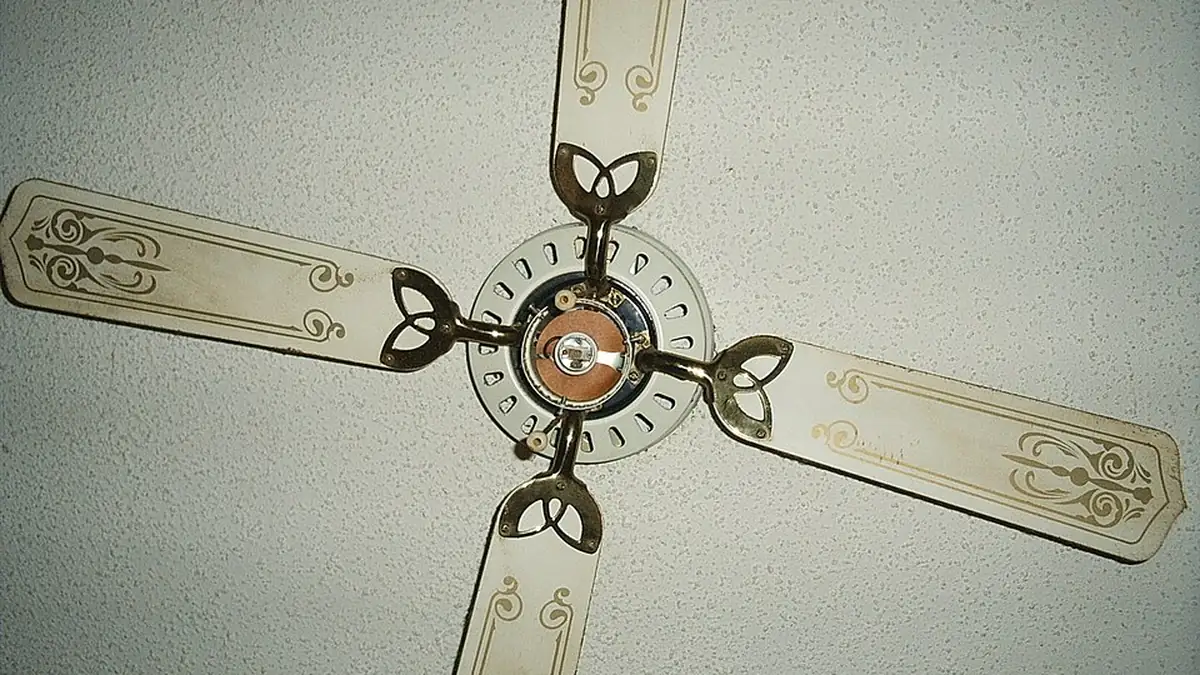
You can use smart bulbs in a ceiling fan, as long as the fan does not dim the light, the bulbs keep constant power, and the size fits. Those three conditions fail more often than people expect.
A ceiling fan is one of the harder places to put a smart bulb. The fixture is often small, the light is frequently on a pull chain or a dimming control, and the motor vibrates. Here is what to check before buying.
Table of Contents
Will a smart bulb fit a ceiling fan?
Check the base size and the physical space. Many ceiling fans use smaller A15 or candelabra bases rather than the standard A19, and smart bulbs are usually bulkier than ordinary ones.
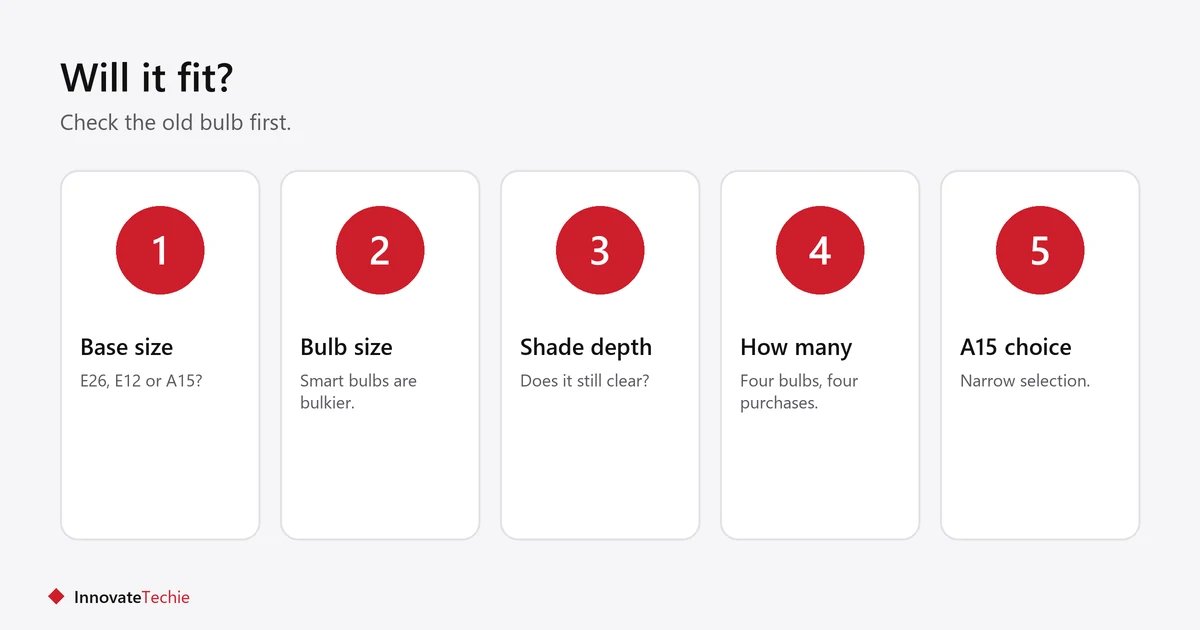
- Base size: look at the old bulb. E26 is standard in the US; E12 candelabra and A15 are common in fans.
- Bulb length and width: smart bulbs are taller and fatter because of the electronics inside.
- Enclosure depth: a glass shade that just cleared the old bulb may not clear a smart one.
- Number of bulbs: a four-bulb fan means four smart bulbs, which adds up fast.
- A15 smart bulbs exist but the choice is narrow, so check availability before committing to the idea.
The dimming problem
If the fan dims the light, do not put smart bulbs in it. Reduced or chopped power stops smart bulbs working properly and can shorten their life.
- Fans with a light dimmer on the remote or wall control vary the power to the socket.
- Smart bulbs expect full, constant voltage and dim themselves electronically instead.
- The result is flickering, buzzing, bulbs that will not pair, or bulbs that fail early.
- A fan with simple on/off light control is fine. A fan with a dimming light is not.
- If the control is a wall dimmer rather than the fan itself, leave it at full and dim in the app.
The same problem on ordinary fittings is covered in smart bulbs without a hub.
The power problem
Smart bulbs need constant power. If the fan’s pull chain or wall switch cuts power to the light, the bulbs go offline and cannot be controlled at all.
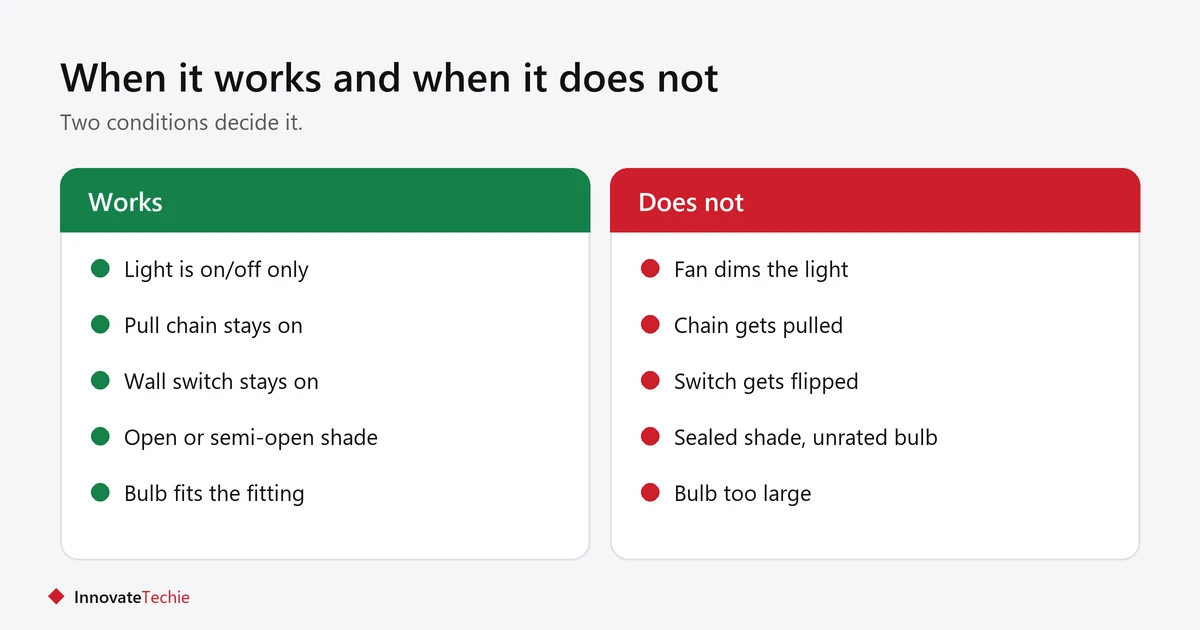
- Leave the pull chain in the on position permanently, and control the light in the app.
- Tape or tie the chain if people in the house keep pulling it out of habit.
- If a wall switch controls the fan, that switch must stay on too.
- Tell everyone in the house, because this is the single most common complaint about smart bulbs in fans.
- Consider a smart fan controller instead if the chain cannot stay on.
More on this failure mode is in smart device not connecting to wifi.
Does vibration damage smart bulbs?
Possibly, over time. A fan motor vibrates, and some manufacturers advise against using their bulbs in fans for that reason, along with electrical interference from the motor.
- Check the bulb maker’s own documentation. Some state ceiling fan use explicitly; some advise against it.
- Vibration-rated bulbs exist, usually sold for garage door openers and fans.
- Treat strong claims about motor interference with some caution. The clearest evidence is in manufacturer guidance, not forum posts.
- If a bulb fails early in a fan and not elsewhere, vibration is the likely cause.
Heat and enclosed fittings
Check whether the bulb is rated for enclosed fixtures. Many smart bulbs are not, and a closed glass shade on a fan traps heat around the electronics.
- Look for “suitable for enclosed fixtures” on the box or spec sheet.
- Heat shortens the life of the electronics inside a smart bulb more than it does a plain LED.
- An open or semi-open shade is much more forgiving than a sealed one.
- Running at lower brightness produces less heat, which helps in a tight fitting.
If you are replacing the fan itself rather than just the bulbs, ENERGY STAR lists certified ceiling fans, which use less energy than uncertified models.
What to use instead
If the checks above rule out smart bulbs, there are two better options for a ceiling fan.
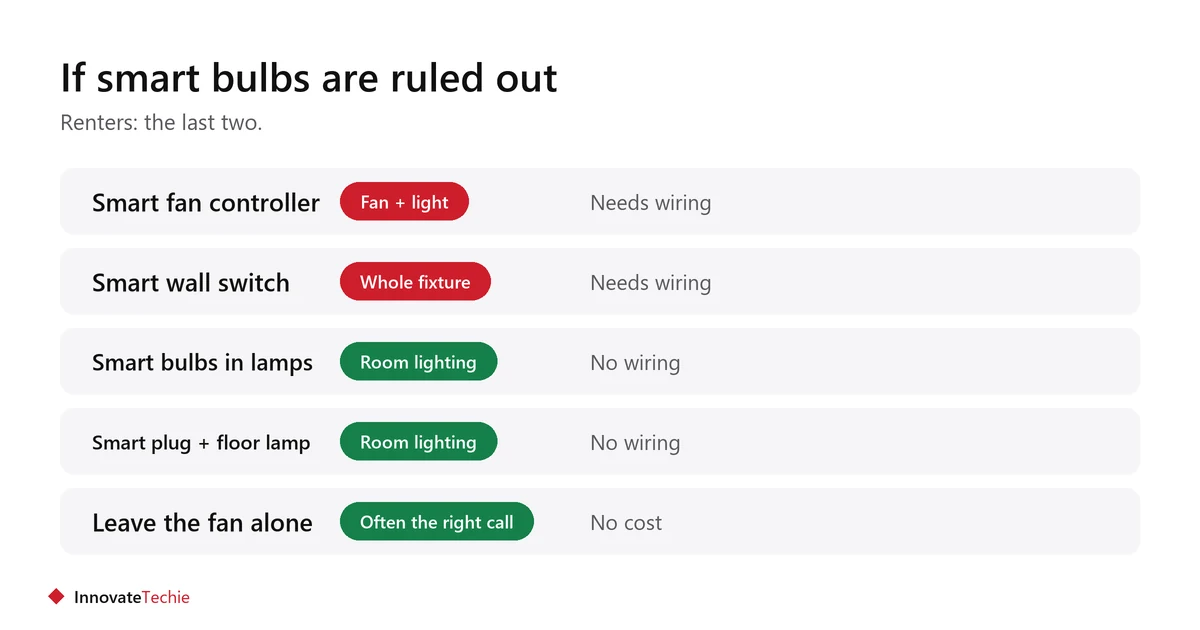
| Option | What it does | Suits |
|---|---|---|
| Smart fan controller | Replaces the fan’s receiver; controls fan and light | Owners, not renters; needs wiring |
| Smart wall switch | Controls power to the whole fixture | Owners; needs wiring |
| Leave the fan alone | Put smart bulbs in lamps instead | Renters and anyone avoiding wiring |
| Smart plug on a floor lamp | Adds controllable light to the room | Renters |
For renters especially, the lamp route is usually the better answer. See smart lighting for renters.
Related guides
- What Not to Plug Into a Smart Plug: 8 Essential Rules
- Smart Plug Not Connecting? 8 Proven Fixes That Work
- Smart Plug Ideas: 12 Easy Routines for Every Room
Frequently asked questions
Can you put smart bulbs in a ceiling fan?
Usually yes, if the fan does not dim the light, the bulbs can keep constant power, and the base and size fit. Fans with a dimming light control are the main exception.
Why do my smart bulbs not work in my ceiling fan?
Most often the pull chain or wall switch is cutting power, which takes the bulbs offline. If power is constant, the next likely cause is the fan dimming the light.
What size smart bulb fits a ceiling fan?
Check the old bulb. Many fans use A15 or E12 candelabra rather than standard E26, and smart bulbs are bulkier, so confirm the shade still clears the bulb.
Does a ceiling fan damage smart bulbs?
Vibration from the motor can shorten bulb life, and some makers advise against fan use for that reason. Vibration-rated bulbs are sold for fans and garage door openers.
Can I use smart bulbs with a ceiling fan remote?
Only if the remote switches the light on and off rather than dimming it. A remote that dims the light varies the power and will cause flickering or pairing failures.
Are smart bulbs safe in an enclosed ceiling fan light?
Only if the bulb is rated for enclosed fixtures, which many are not. A sealed glass shade traps heat around the electronics and shortens the bulb’s life.
About the author: Hamza Javaid is a web developer and the editor of InnovateTechie. Read our editorial policy.
Last updated: October 2026. Prices, plans and app menus change often, so confirm details on the manufacturer’s page before you buy.
