


Can my landlord make me remove a smart lock? Usually yes, if the lease prohibits alterations or you fitted it without asking. What a landlord normally cannot object to is a lock that changed nothing, which is why retrofit locks cause so few arguments.
The deciding questions are whether the outside of the door changed, whether their key still works, and what your lease actually says. Rules vary by state and country, so this is background rather than legal advice.
Table of Contents
What the lease controls
Almost always a clause about alterations, and sometimes one about locks and access specifically. Read both before anything else.
- An alterations clause usually covers anything attached to or changing the property.
- A locks clause may require the landlord be given a working key at all times.
- An access clause gives them entry for repairs and emergencies with notice.
- A lock that blocks that access is the thing most likely to cause a problem, whatever else the lease says.
- Silence in the lease is not permission, but it does make the conversation easier.
Why retrofit locks rarely cause trouble
A retrofit lock fits over the inside thumbturn. The outside hardware, the keyhole and the landlord’s key are untouched, so nothing they rely on has changed.
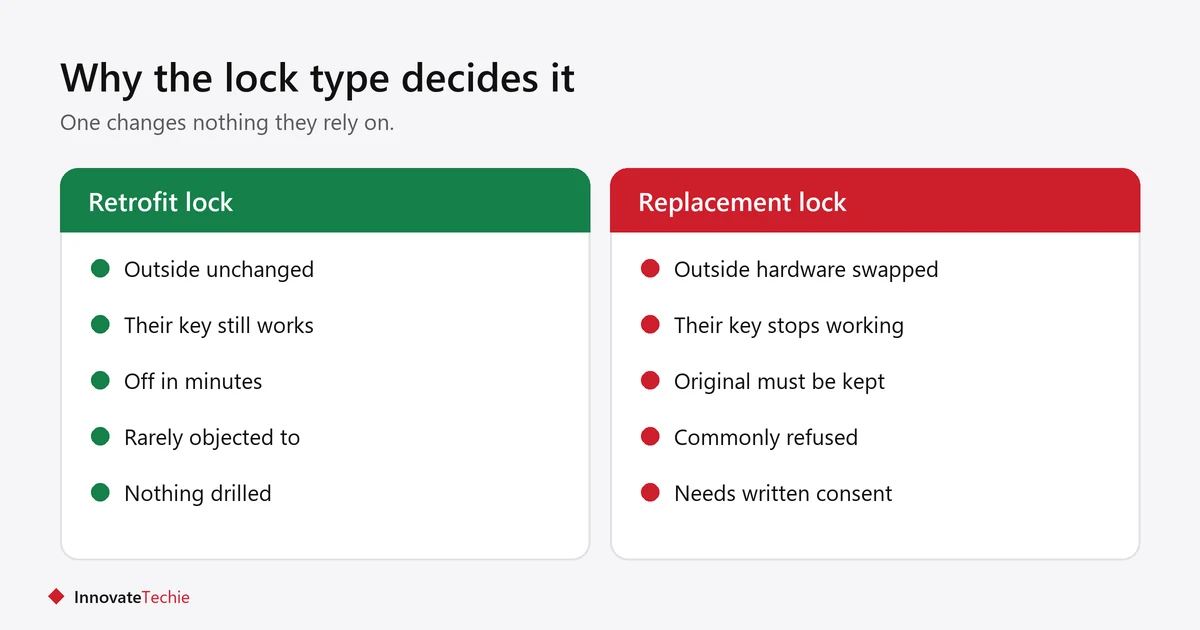
| Retrofit lock | Replacement lock | |
|---|---|---|
| Outside of the door | Unchanged | Changed |
| Landlord’s key | Still works | Stops working |
| Drilling | None | Usually none, but hardware swapped |
| Reversible | Minutes with a screwdriver | Needs the original lock kept |
| Likely objection | Rare | Common |
Which lock does what is covered in smart lock for renters.
How to ask so the answer is yes
Ask in writing, describe exactly what will and will not change, and address their key before they raise it.
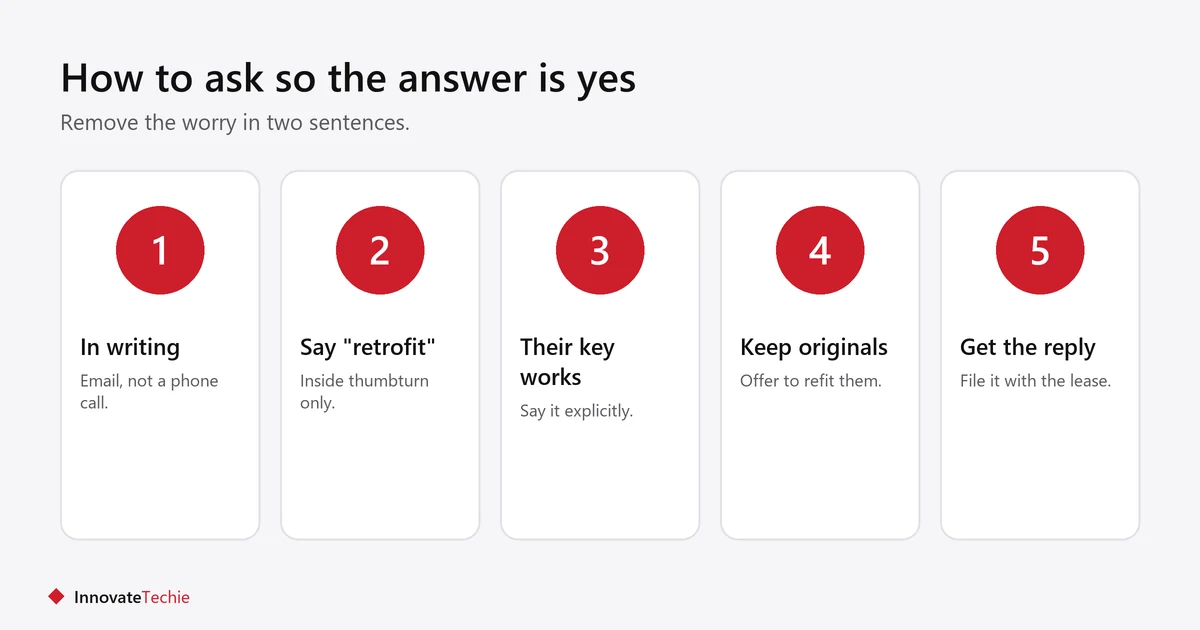
- Email rather than phone, so there is a record.
- Say it is a retrofit lock over the inside thumbturn, if it is.
- State plainly that the outside keyhole is unchanged and their key will still work.
- Offer to keep every original part and refit it at the end of the tenancy.
- Offer them a code as well, if you are comfortable with that.
- Ask them to confirm by reply, and keep that reply with your tenancy documents.
Most refusals come from a landlord imagining a replacement lock. Removing that worry in the first two sentences solves it more often than anything else.
If they say remove it
Do it, and do it properly. An argument about a lock is rarely worth the relationship or the deposit.
- Delete every access code and remove the lock from your account.
- Factory reset it, so no old code works.
- Unscrew the mount and refit the original thumbturn you kept.
- Remove any adhesive residue with gentle heat rather than solvent.
- Photograph the finished door.
- Confirm in writing that it has been removed and the door restored.
The adhesive step is covered in detail in remove adhesive mounts without damaging paint.
If you think the refusal is unreasonable
Check your own jurisdiction before arguing, because the rules genuinely differ. Some places let tenants change locks provided the landlord keeps access; others require the original to be restored at the end.
- Read the lease again, carefully, before raising anything.
- USAGov lists the state agencies that handle tenant rights, which link through to state handbooks and housing agencies.
- A tenants’ union or legal aid service can tell you what applies locally, usually free.
- Keep every message in writing from that point on.
- Weigh it up honestly. A smart lock is a convenience, and a dispute can outlast the tenancy.
Nothing here is legal advice. Lock and access rules are set locally and change, so confirm what applies where you live.
What to do instead if the answer is no
You can get most of the convenience without touching the door at all.
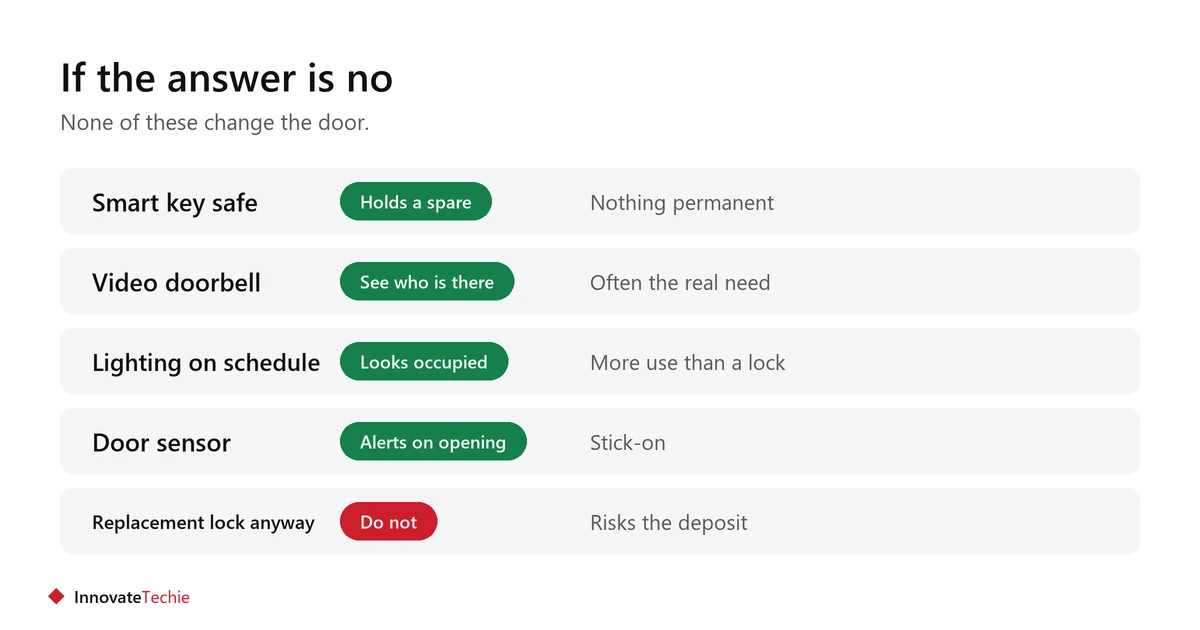
- A smart key safe holding a spare key, fixed to nothing permanent or free-standing.
- A video doorbell so you can see who is there, which is often the real need.
- Smart lighting on a schedule, which does more for security than a lock does.
- A door and window sensor that alerts you if the door opens.
- None of these change the door, so none of them need permission in most leases.
Camera-free options are in apartment security without cameras.
At the end of the tenancy
Leave the door exactly as you found it, and have proof that you did.
- Refit the original hardware before the final inspection, not during it.
- Photograph the door from both sides in good light.
- Keep the removed smart lock, reset, for your next home.
- Note it in your move-out correspondence.
- Keep the permission email. It settles any later question about whether it was allowed.
Related guides
- Smart Lighting for Renters: 7 Easy No-Drill Ideas
- Smart Home Ideas for Renters: 9 Easy No-Drill Upgrades
- Video Doorbell for Renters: 6 Easy No-Drill Options
Frequently asked questions
Can my landlord make me remove a smart lock?
Usually yes if the lease prohibits alterations or you installed it without permission. A retrofit lock that leaves the outside keyhole and their key working is far less likely to be objected to.
Do I need permission to install a smart lock in a rental?
Ask, even for a no-drill retrofit lock. It is still a change to the door, and written permission protects your deposit if there is any later dispute.
Can a landlord refuse a smart lock?
They can if the lease gives them that control, particularly where access or alterations are covered. Most refusals assume a replacement lock, so explaining that a retrofit changes nothing often resolves it.
Does my landlord need a key if I fit a smart lock?
They normally need access for repairs and emergencies. A retrofit lock leaves the original keyhole working, which satisfies this without you handing over anything new.
Can I be charged for fitting a smart lock?
You can be charged for damage or for restoring the door if you altered it without permission. A retrofit lock removed cleanly, with the original parts refitted, usually leaves nothing to charge for.
What can I use instead if my landlord says no?
A smart key safe, a video doorbell, lighting on a schedule, or a door sensor. None of these change the door, so they rarely need permission.
About the author: Hamza Javaid is a web developer and the editor of InnovateTechie. Read our editorial policy.
Last updated: October 2026. Prices, plans and app menus change often, so confirm details on the manufacturer’s page before you buy.
